Belgian · 1921–2013 · Nieuwe Visie
Roger Raveel
Primary Market
Roger Raveel was born on July 15, 1921, in Machelen-aan-de-Leie, Belgium, the village where he continued to live and work until his death in 2013. He studied at the Municipal Academy of Deinze and the Royal Academy of Fine Arts in Ghent. Emerging in postwar Europe, he encountered CoBrA through his friendship with the writer Hugo Claus but resisted alignment with a single movement. The landscape, houses, gardens, bicycles, animals, and people of his immediate surroundings became the raw material of a radically independent visual language.
Continue reading +Show less −
Practice and methodology
Raveel's paintings generate tension between recognizable reality and geometric intervention. White bands, empty squares, mirrored surfaces, and abrupt fields of color interrupt familiar scenes, exposing the canvas as both image and object. His white zones do not simply represent absence; they create pauses through which the viewer becomes aware of perception itself.
A bicycle, table, garden wall, pigeon, or self-portrait may be observed with Flemish directness and then destabilized by flat color or a reflective insert. Raveel also extended painting into objects, environments, ceramics, prints, and public works. The boundary between artwork and surrounding space remained deliberately open.
An evolving legacy
In the 1960s, Raveel became associated with the Nieuwe Visie, or New Vision, alongside artists including Raoul De Keyser, Etienne Elias, and Reinier Lucassen. Their landmark intervention at the cellars of Beervelde Castle treated architecture as an active pictorial field. Raveel's subsequent career continued to test how art might remain rooted in ordinary life while addressing the changing visual conditions of modernity.
His position has been reinforced through major Belgian retrospectives, including the 2021 centenary exhibition at BOZAR in Brussels. Rather than an isolated regional figure, he is increasingly understood as an artist whose anti-illusionistic strategies connect postwar European painting to later conceptual approaches.
Institutional recognition
The Roger Raveel Museum in Machelen-aan-de-Leie is the principal center for the preservation, study, and presentation of his work. Its collection encompasses paintings, drawings, prints, objects, and archival materials. Raveel's work is also held in major Belgian and European collections, and his public projects remain visible across Flanders. The Roger Raveel Route allows visitors to encounter the physical environments that informed his imagery.
Collector's market context
Raveel occupies an important position within Belgian postwar art, with a market supported by strong national recognition and growing international reassessment. Paintings from pivotal periods and works incorporating signature devices - white voids, mirrors, bicycles, garden imagery, or self-portraiture - command particular attention. Date, subject, provenance, exhibition history, and inclusion in authoritative literature materially affect value. His dedicated museum and renewed curatorial visibility offer a substantial scholarly framework for collectors, while the market still permits distinctions between museum-level paintings, works on paper, prints, ceramics, and editioned objects.
Works
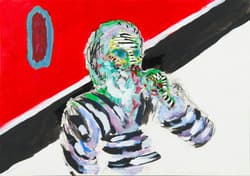
Roger Raveel
Dronken van rood, 1985–1990
Pencil, ink, and gouache on paper
Price on request
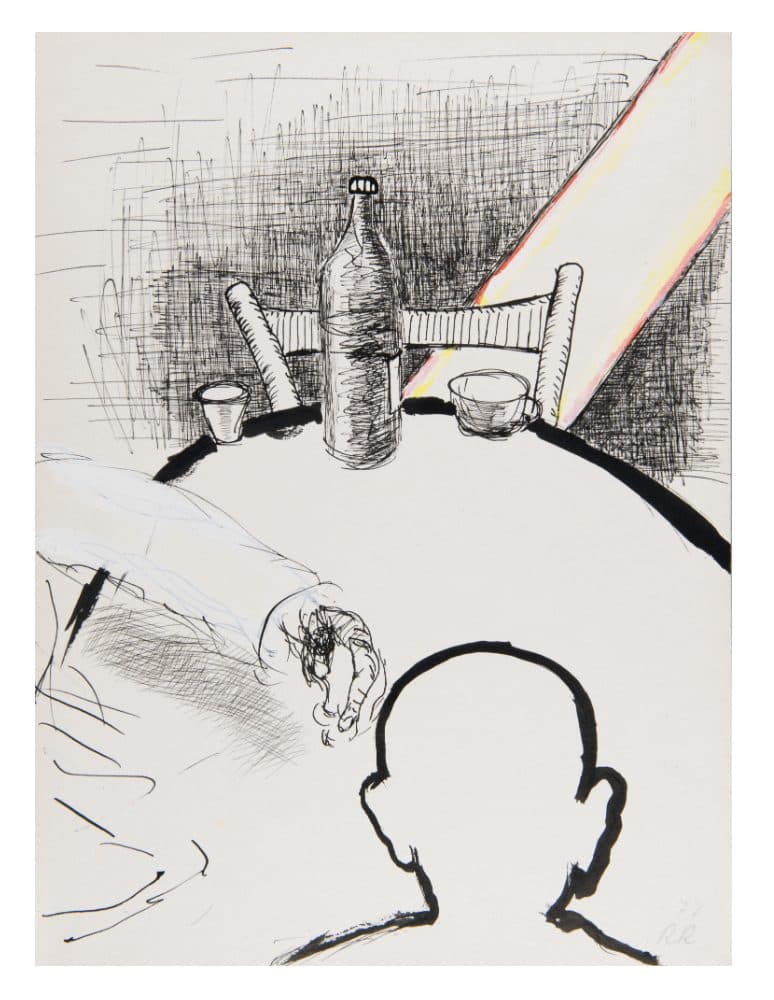
Roger Raveel
Ik aan tafel, 1977
Ink pastel and paint on paper
Price on request
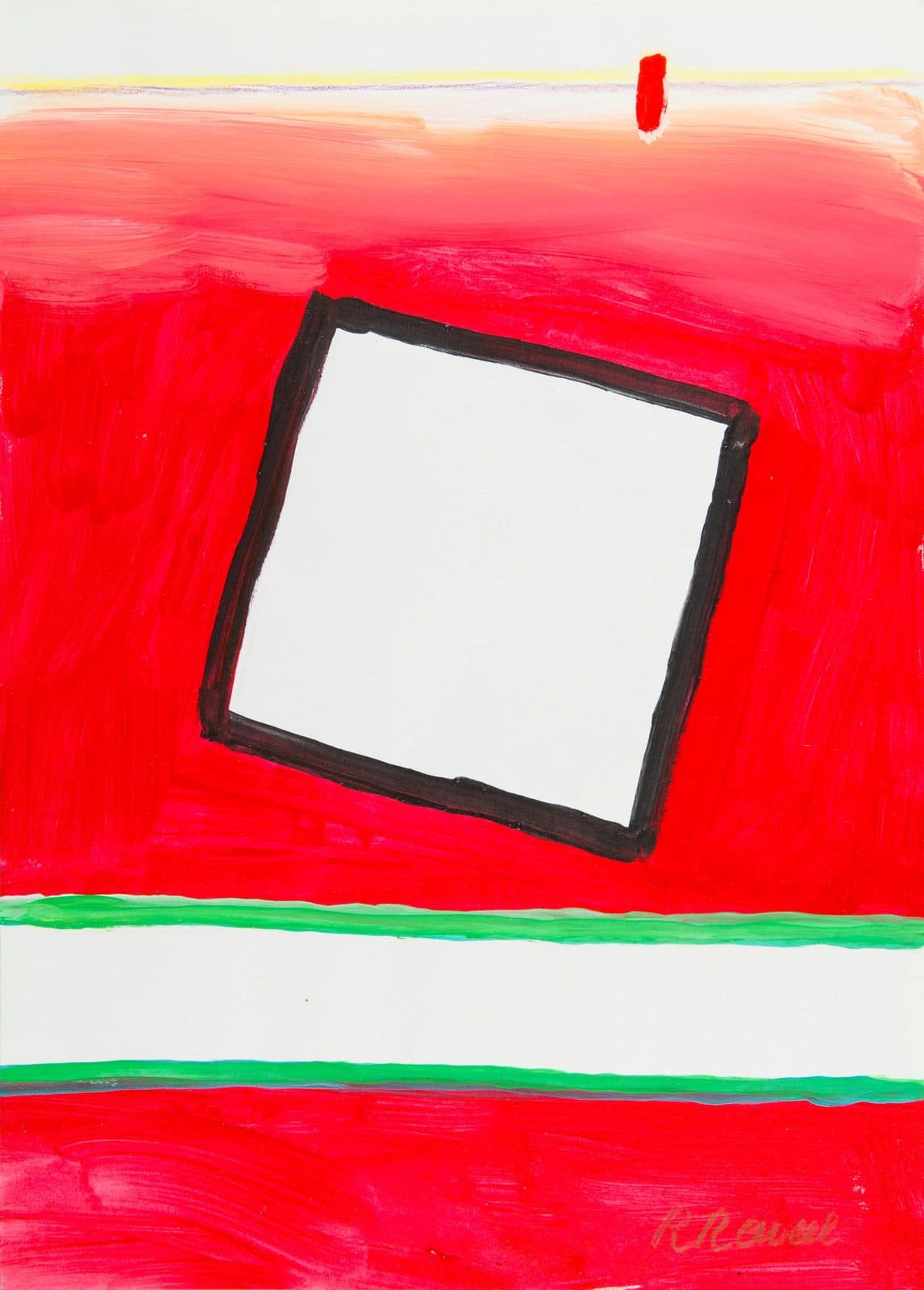
Roger Raveel
Rood landschap met vierkant en horizontale uitsparing, 1985
Ink, pastel crayon and gouache on paper
Price on request
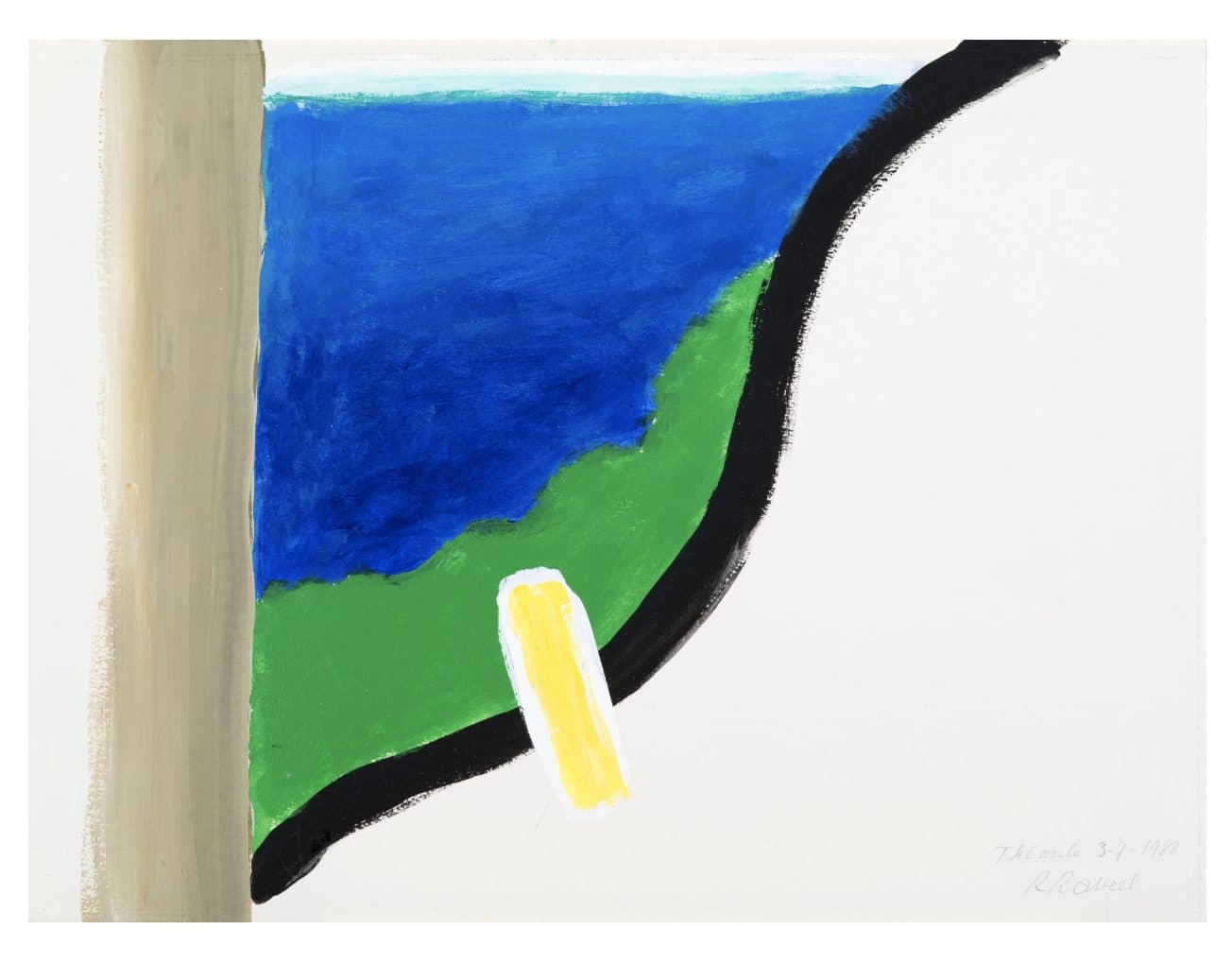
Roger Raveel
Théoule, 1988
Ink and paint on paper
Price on request
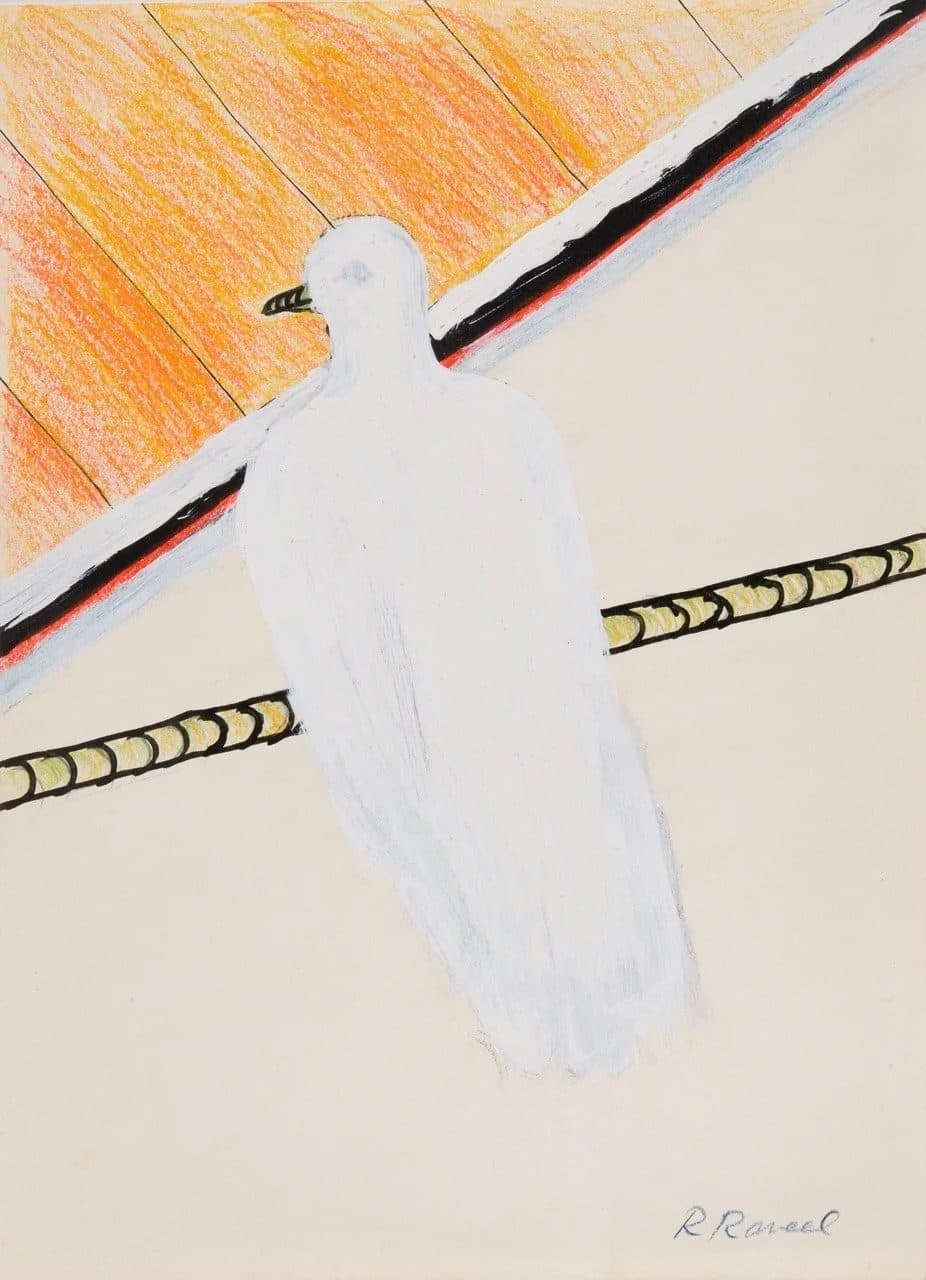
Roger Raveel
Trots duifje, 1962
Ink, gouache, and pastel on paper
Price on request
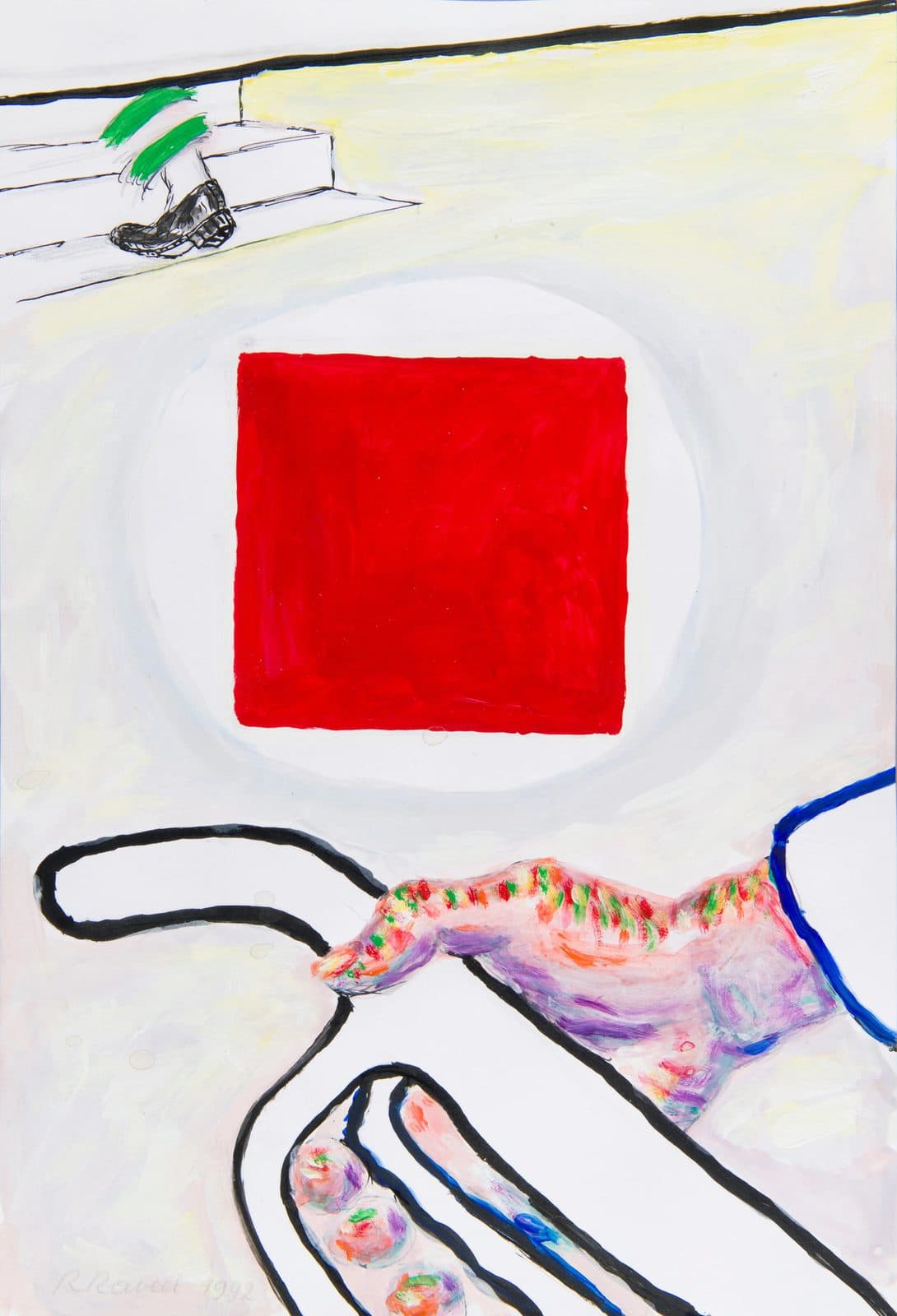
Roger Raveel
Voor de reis, 1992
Pencil, ink, and gouache on paper
Price on request